
Leading with Values
How Esper Turned Company Values into Everyday Leadership
“Our employees are starting to see the impact of their leaders leading by example and living by the values. We see alignment across different departments with no butting heads (like before), which is leading to our employees being happier and more effective. We couldn't have done it alone."
— David Barclay, Chief Financial Officer, Esper
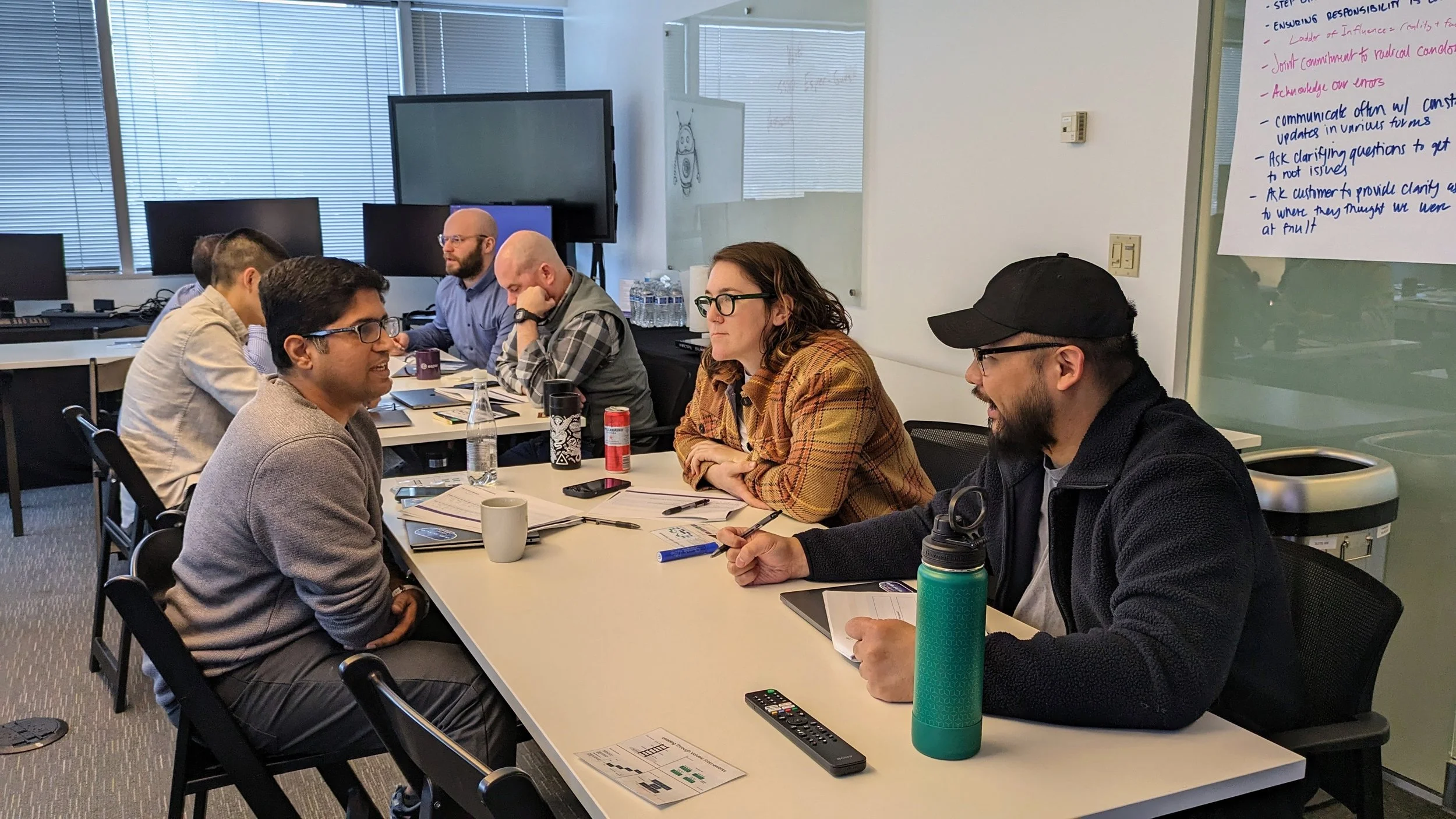
Esper leaders in a Regroup workshop
The Challenge
Like many fast-growing organizations, Esper had reached an important inflection point. The company had grown quickly, expanded across two countries, and welcomed many new managers into leadership roles. During that period of growth, the executive team took the opportunity to redefine the company's values so they better reflected the organization they wanted to become. It was an important investment in the future of the company, but leadership also recognized that defining values and living them are two very different things.
The executive team wanted the values to shape how managers led their teams, collaborated across departments, made decisions under pressure, and navigated difficult conversations. In short, they wanted the values to become part of Esper's operating system rather than posters on the wall.
With approximately 150 employees across Bellevue, Washington, and Bengaluru, India, this challenge was especially important. As organizations grow, managers naturally develop their own leadership styles and teams begin creating local norms. While that individuality is healthy, it can also lead to inconsistent employee experiences when leaders interpret organizational values differently. Esper wanted managers to have the flexibility to lead authentically while sharing a common understanding of what excellent leadership looked like throughout the company.
Understanding the Real Problem
One of the first things we learned in our conversations with Esper's leaders was that commitment wasn't the issue. Managers believed in the company's values and genuinely wanted to build a positive culture. The challenge was far more practical than philosophical. They were asking questions that many organizations struggle to answer. What does "Build Trust" (one of their company values) actually look like during a difficult performance conversation? How should a manager balance "Innovate, Experiment, and Learn" with the pressure to deliver results? What does "Fiercely Collaborative" mean when two departments disagree about priorities or timelines?
These questions rarely have simple answers, which is precisely why values often remain abstract. Most organizations define what they value but spend far less time helping leaders navigate the situations where those values are tested. As a result, managers rely on their own instincts and previous experiences, creating different interpretations across the organization. Esper recognized that if every manager answered those questions differently, employees would inevitably experience different cultures depending on who they reported to.
Rather than trying to standardize every leadership decision, Esper wanted to create a shared leadership philosophy. The goal was not to make every manager the same, but to help every manager approach difficult situations through the same set of organizational principles and give them the tools and shared language to build a consistent way of leading across the organization.
Our Approach
Together, we designed a six-month leadership development journey focused on helping managers translate Esper's values into everyday leadership behaviors. Instead of treating values as concepts to memorize, each workshop explored the real situations managers encountered every day—making decisions with incomplete information, coaching struggling employees, working across functional boundaries, balancing speed with quality, and navigating disagreement within their teams.
Each month focused on one of Esper's core values, introducing practical frameworks that managers could immediately apply in their work. The workshops combined reflection, discussion, case examples, and individual planning so participants left with one or two specific leadership actions they committed to practicing before the next session. Rather than asking managers to "be more collaborative," for example, they identified concrete actions they would take to improve decision-making, invite differing perspectives, or communicate expectations more clearly, applying the workshop frameworks or tools into their day-to-day experience.
We also knew that behavior change doesn't happen in a workshop. Lasting change requires opportunities to experiment, reflect, and learn from experience. Two weeks after each workshop, managers met in small peer coaching groups to discuss what happened when they applied the ideas. These conversations became an important part of the learning process. Managers shared successes and setbacks, coached one another through difficult situations, and refined their approaches based on real experiences. Over time, the learning became less about workshop content and more about helping one another become stronger leaders. Of course, this peer accountability also helps with the behavior change too.
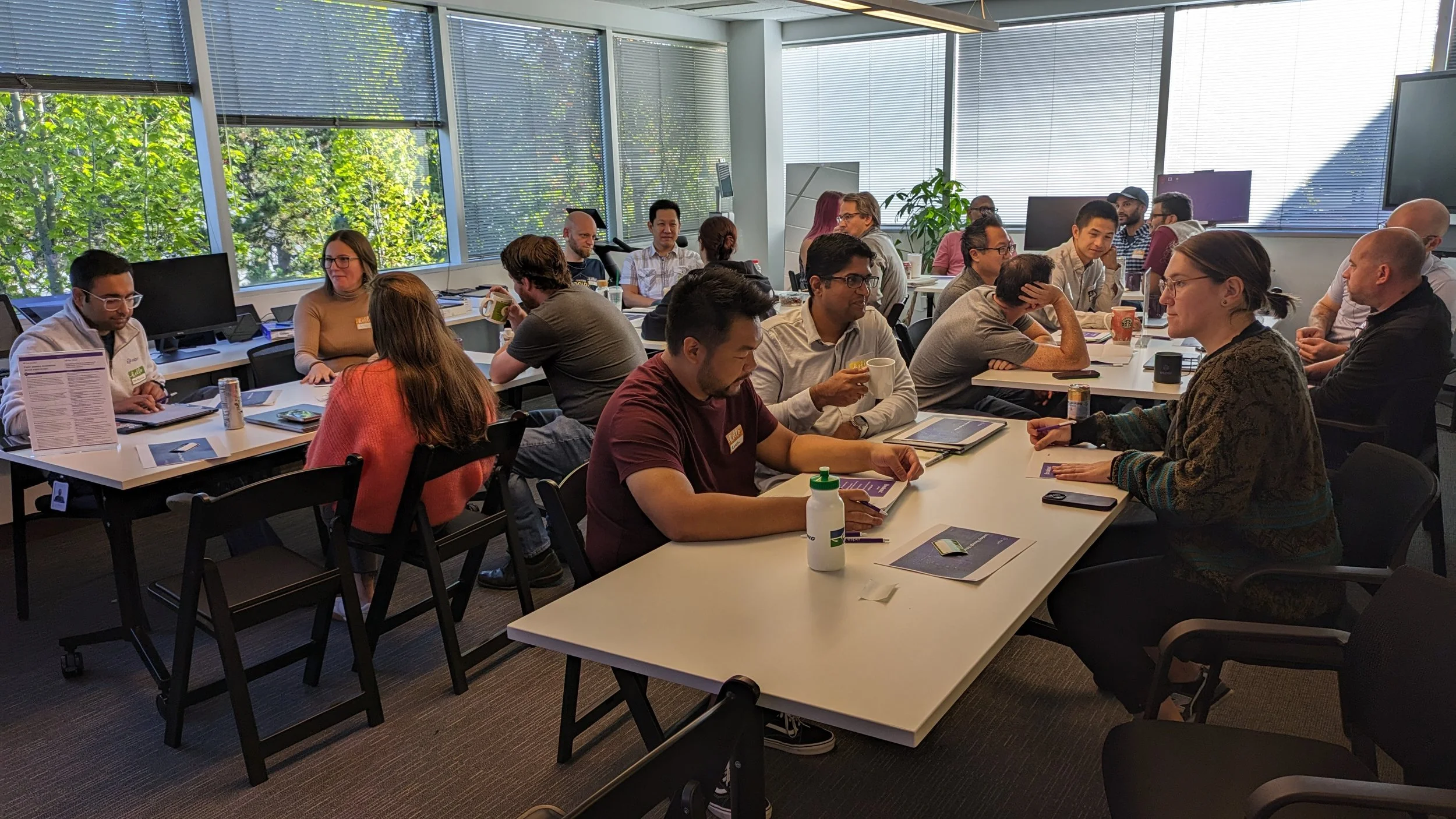
Esper leaders in a Regroup workshop
Building a Global Leadership Community
Because Esper's leadership team wanted to strengthen collaboration across both its U.S. and India offices, the engagement extended beyond manager development within each location. While the core leadership journey was delivered separately to respect local cultures and time zones, both groups worked from the same leadership principles and shared language.
Toward the end of the engagement, leaders from Bellevue and Bengaluru came together virtually to focus specifically on cross-cultural collaboration. Rather than trying to eliminate differences, the conversations explored how different communication styles, assumptions, and cultural norms influenced the way teams worked together. Managers reflected on where misunderstandings commonly occurred and identified practical ways to strengthen relationships across geographies while remaining grounded in Esper's values. This work helped reinforce that one organizational culture does not require everyone to work identically; it requires shared expectations, mutual understanding, and a commitment to learning from one another.
The Results
Culture change is rarely dramatic. More often, it appears gradually through hundreds of small moments that begin to accumulate over time. Managers approach conversations differently. Teams adopt a shared language for discussing difficult issues. Decisions become more transparent. Conflict during collaboration feels less personal because people have common approaches and skills for working through disagreement.
Esper's leadership began seeing those shifts as the program progressed. Managers reported greater confidence in leading difficult conversations and coaching their teams. Leaders across departments began referencing the same leadership language and frameworks, creating greater consistency throughout the organization. The company's employee Net Promoter Score also improved during the engagement, suggesting that employees were beginning to experience the effects of more consistent leadership.
As one Esper participant shared:
“I was skeptical about this program at first, but I’ve seen demonstrable change. We’re using the shared language to improve our meetings and I’m seeing better collaboration.”
And, David Barclay, Esper's Chief Financial Officer, reflected on the impact this way:
"Our employees are starting to see the impact of their leaders leading by example and living by the values. We see alignment across different departments with no butting heads (like before), which is leading to our employees being happier and more effective. We couldn't have done it alone."
For Esper, the most meaningful outcome wasn't simply that managers understood the company's values more clearly. It was that those values increasingly became part of everyday leadership conversations and decisions. The organization had begun closing the gap between the culture it aspired to create and the culture employees experienced every day.
Reflecting on the partnership, David Barclay shared:
"I'd do it a million times over. We initially thought we could do this by ourselves—we have a ton of talented people on staff. Sometimes you just need someone that's not you and not in the company, who brings a different perspective and doesn't have a bias.
We are really happy with how Regroup's custom program was put together to meet our needs and focus. Our teams left with content that became part of the Esper culture, and Regroup created great opportunities for our people to come together. We couldn't be happier with our selection for a coaching partner."
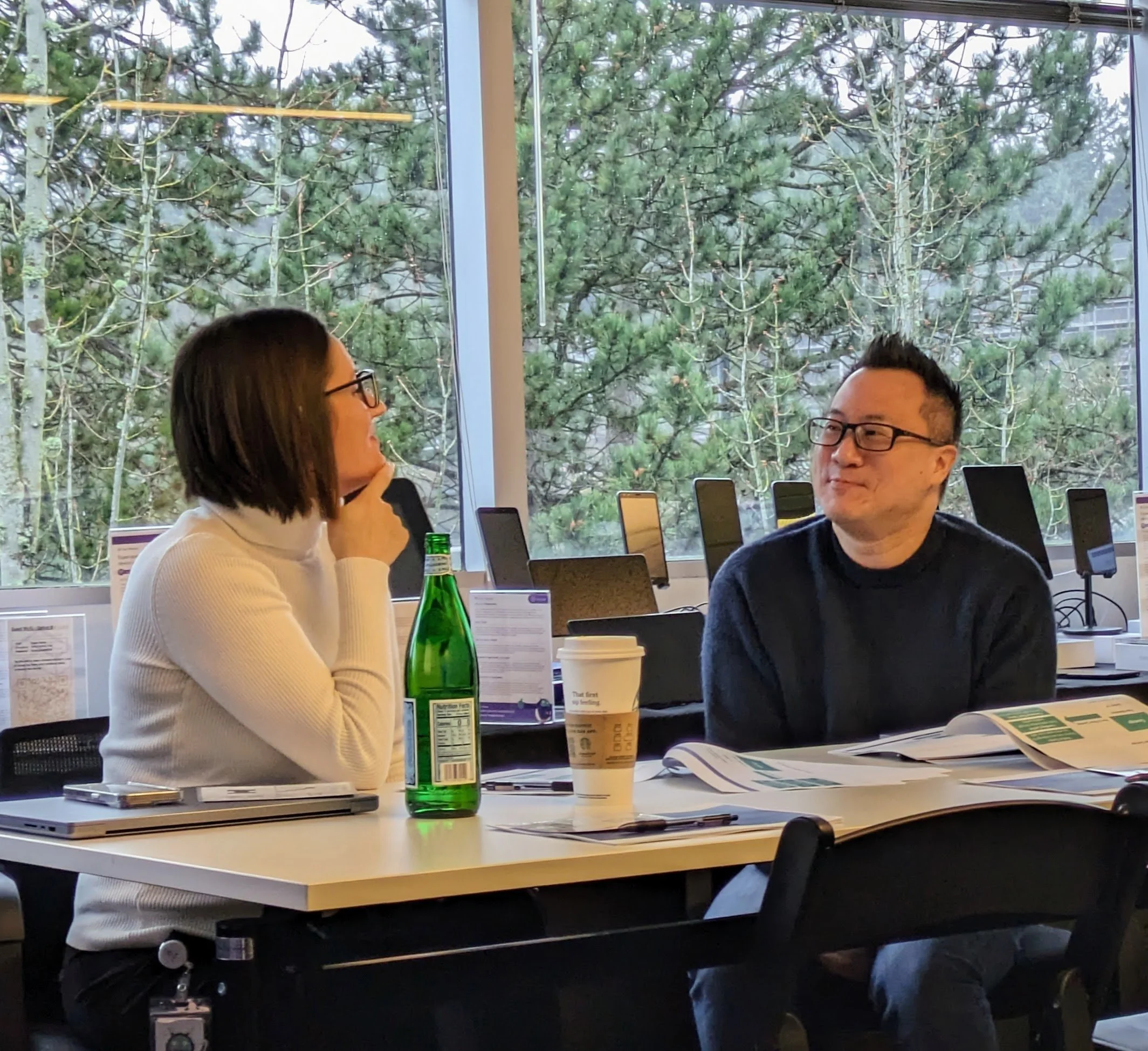
Esper leaders in a Regroup workshop
Reflections
One of the lessons reinforced through this partnership is that organizations don't build culture by defining values, they build culture by helping leaders practice them. Values become meaningful only when they shape everyday decisions, conversations, and relationships. As managers develop a shared language, practical leadership tools, and stronger relationships with one another, those values begin to show up consistently in how people lead and work together.
Perhaps the biggest takeaway is that lasting behavior change doesn't happen in a workshop. Workshops create awareness and introduce new ways of thinking, but real change happens after the workshop through practice, reflection, feedback, and repetition. That's why every part of this engagement was designed to help managers apply what they learned in their everyday work, and support each other to put the learning into practice. Over time, the new behaviors became habits, and those habits along with the shared language began to shape Esper's culture.
Facing a Similar Challenge?
Whether you're refreshing your values, strengthening leadership, or trying to improve collaboration across teams, every organization starts from a different place. We'd love to learn about what you're building, the challenges you're navigating, and whether we might be a good partner to help you move forward.
Let's start a conversation. Book a free consultation here.